This guide is for event organisers who want their event to survive the unexpected, from Colombo downpours to power dips and late chief guests. It explains how to assess risks, plan responses, assign owners and communicate calmly when something goes wrong.
- Rate every risk for likelihood and impact
- Give every risk an owner
- Set weather decision times
- Back up power and technology
- Agree who communicates during incidents
The six common risks
| Risk | Prevention | On-the-day response |
|---|---|---|
| Rain | Indoor backup, marquees | Move by an agreed decision time |
| Power interruption | Generator plus UPS on sound and LED | Switch over, MC holds the room |
| Traffic delays | Early registration, welcome activity | Shift non-critical segments |
| Supplier no-show | Confirmed call sheet, backups | Call the backup supplier |
| VIP or chief guest delay | Flexible running order | Swap segments |
| Health and safety | Exits, first aid, crowd plan | Named safety lead |
How to run a simple risk assessment
List every risk you can think of, then rate each one for likelihood (low, medium, high) and impact (low, medium, high). Focus your planning on high-likelihood or high-impact risks. For each, write prevention steps, a response plan and an owner. Review the list at each planning meeting and again on the day.
Weather contingency in detail
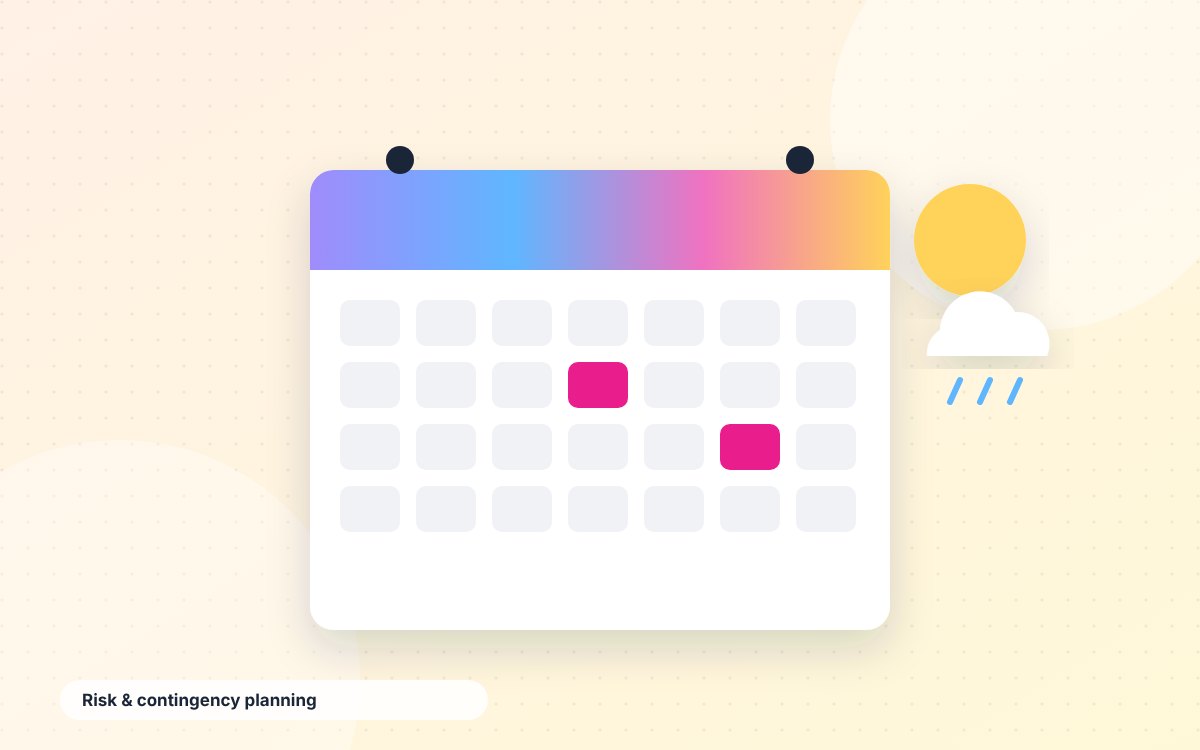
For any outdoor element, prepare an indoor alternative or marquee option. Agree a decision time with the venue, usually three to four hours before guests arrive. Monitor forecasts from the Department of Meteorology in the days before. Have umbrellas available for arrivals, protect AV and power from rain, and plan for heat with shade and water.
Who decides on the day
Name one decision-maker for changes, with authority to approve extra spend. Put it in the run sheet.
Build it in from the start
Contingency is part of our event planning Sri Lanka process and is carried out by our event management Sri Lanka crew. See our run sheet guide or contact our event management company.
Power and technical failures
- Confirm the venue's generator covers stage, sound and LED
- Use a UPS for the sound desk, laptops and streaming
- Keep spare microphones, batteries and cables
- Back up presentations on two laptops and a USB drive
- Prepare holding music and an MC script for delays
People risks
Speakers fall ill, chief guests get delayed and MCs lose their voice. Have a backup presenter briefed for key roles, a flexible running order, and clear authority for the event manager to make changes. For large public events, plan crowd management, security staff and clear communication channels.
Health, safety and accessibility
- First aid kit and a trained first-aider on site
- Nearest hospital and ambulance contact
- Clear, unblocked emergency exits
- Accessible routes, seating and toilets
- Food safety with reputable caterers
- Cable management to prevent trips
Communicating during an incident
Decide in advance who speaks to guests, who speaks to the venue and who updates the client. Use a crew WhatsApp group or radios for fast internal updates. If guests need to be informed, the MC delivers a calm, brief message. For public events, prepare a holding statement for social media.
A sample risk register
| Risk | Likelihood | Impact | Owner |
|---|---|---|---|
| Heavy rain during outdoor segment | Medium | High | Event manager |
| Power dip affecting LED | Low | High | AV lead |
| Chief guest delayed | Medium | Medium | Protocol officer |
| Keynote slides fail | Low | Medium | AV lead |
| Over-capacity at registration | Medium | Medium | Registration lead |
| Guest medical emergency | Low | High | First-aider |
After the event: learning from incidents
Record every incident and near-miss, however small, in a short debrief within a few days. What happened, how the team responded, and what would prevent it next time? Update your templates, checklists and supplier briefs with the lessons. Over time this record becomes one of the most valuable assets an event team has. It's part of how our event management Sri Lanka team keeps improving, and it feeds into event planning for the next event.
Mistakes to avoid in risk planning
The most common mistake is having a contingency plan that nobody on the crew knows about. Brief it. Others include not setting a decision time for weather, assuming the venue generator covers AV, and having no one with authority to make changes on the day. Write it down, assign owners and rehearse key responses.
Example scenario
At an outdoor product launch on a hotel lawn, the forecast shows afternoon showers. The contingency plan names the ballroom as the backup, with a 2 pm decision time. At 1:45 pm, the event manager calls the move. The crew relocates the LED and décor to the ballroom, already prepared with power and seating, and guests are guided indoors on arrival. The launch starts on time, and most guests never knew about plan B.
This is an illustrative scenario, not a specific client case.
Tips from our event team
- Write the contingency plan into the run sheet
- Brief the crew on emergency procedures
- Keep a printed contact list
- Know the nearest hospital
- Review risks after every event
Quick checklist
- Risk register complete
- Owners assigned
- Weather decision time set
- Power backup confirmed
- First aid arranged
- Incident communication plan
How Cypher Events can help
Cypher Events delivers full event management across Sri Lanka. We contract and brief every supplier, manage stage, sound, lighting and LED production, write and run the run sheet, staff registration and ushering, handle chief guest and VIP protocol, and run a technical rehearsal before guests arrive. On the day, a named event manager and stage manager lead a crew that keeps every cue on time, with contingency plans for weather, power and supplier issues.
Because we're part of the same group as Cypher Digital and Findit.lk, your event can also be promoted and turned into content: teaser reels, Facebook, Google, PR, SMS, WhatsApp and banner campaigns, live posting on the day and highlight videos afterwards.
See event management Sri Lanka, plan ahead with event planning Sri Lanka, or speak to our event management company in Sri Lanka on +94 76 031 7477.
Key terms in this guide
- run sheet
- The minute-by-minute schedule for event day, listing every segment, cue, owner and dependency.
- call sheet
- A list of every supplier and crew member with arrival times, setup areas and contact numbers.
- chief guest
- The senior guest of honour at a Sri Lankan event, who usually lights the lamp and gives an address.
- technical rehearsal
- A full run-through of sound, lighting, video and cues before guests arrive.
- stage manager
- The crew member who calls cues from the run sheet and keeps the programme on time.
- contingency
- A planned response, budget buffer or backup arrangement for things that could go wrong.
Frequently asked questions
Do I need a generator for an indoor hotel event?
Most hotels have backup power, but confirm it covers your AV. A UPS for sound and LED adds protection.
When should we decide to move an outdoor event indoors?
Set a decision time, usually 3–4 hours before guests arrive, and agree it with the venue.
Do events need insurance in Sri Lanka?
It's wise for large or public events. Discuss cover with your insurer and the venue.
What is an event contingency plan?
A written plan of what to do if key risks happen, such as rain, power cuts or a speaker no-show.
Who should own the contingency plan?
The event manager, with named owners for each risk.
Do I need security at a corporate event?
For large or public events, yes. For small private events, venue security may be enough.
How do I prepare for traffic delays in Colombo?
Open registration early, add a welcome segment and keep buffers before key moments.
What is a risk register?
A list of potential risks with likelihood, impact, prevention and owners.
Should we debrief after every event?
Yes. A short debrief captures lessons while they're fresh.
How do I plan for a speaker cancellation?
Have a backup speaker or panel, or a flexible segment you can expand, and brief the MC on the change.
Should contingency plans be shared with clients?
Yes. Clients should know the main risks and who will make decisions on the day.
What are the most common event risks in Sri Lanka?
Rain, power interruptions, traffic delays, supplier issues and VIP delays.
How much contingency budget should I keep?
Match it to the event's risks rather than using a fixed percentage.
Who decides to activate plan B?
The named event manager, at the agreed decision time.
Do I need first aid at corporate events?
A first aid kit and a trained person on site is good practice.